The Weight of my Worth: A Reflection on Body Image and Imago Dei
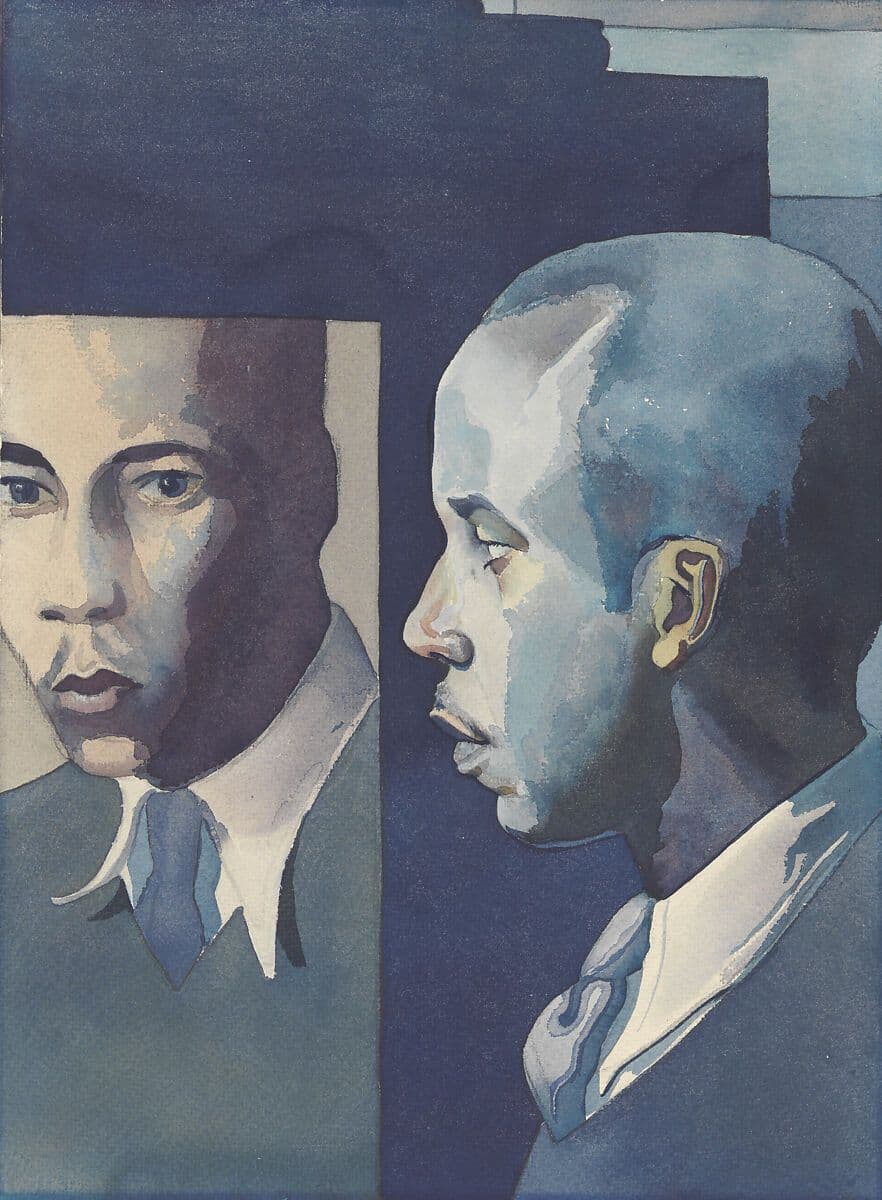
“Do you not use sope when you shawer? … why is you so bwown?”
I cannot remember the face that asked it or how I reacted, just that question. We were four, and four-year-olds are untrained scientists, innocently and often uncouthly trying to understand the world around them.
My family had recently moved to Rehovot, Israel, from Nigeria, as my mom took a postdoctoral position at a local research institute. I was noticeably the only dark-skinned person in my kindergarten. My family likewise stood out in our neighbourhood.
It was during these first cross-cultural mingles that I truly became aware of my body and how I was perceived by others. My body image became a new lodger in the corner of my mind.
A growing body image malaise trailed me back to the mother continent, mutating itself into whatever form was needed to evoke feelings of being spurned: complexion, frame, hair, nose, teeth, hands, even my feet and their gait. The avenues for comparison were endless- from others to me and from myself to myself. There was always something odd to be found in the body if you stared long enough. Yet where either I or everyone else got our idea of normal was illusory.
As a child, my poor body image caused great harm to my soul because I unknowingly derived maybe not all but some of my worth from it. Even in adulthood, as I have progressively worked on building a right view of my body and reaped a harvest from a lifestyle of physical exercise. For all that progress, it only took the foreboding dread caused by my now receding hairline to remind me that my worth was still partially resting on the fragility of my body image.
I knew I was made in God’s image but I still searched for evidence of my worth in the mirror.
Imago Dei
Growing up in church sunday school, I was routinely reminded of King David’s profound message in Psalm 139:14:
“I praise you, for I am fearfully and wonderfully made.
Wonderful are your works;
my soul knows it very well.”
Carved to reflect the sublime likeness and holiness of the Alpha and Omega, from whom all that is true and beautiful derives:, that is Imago Dei, “the image of God.” As recorded in Genesis 1:27:
“So God created man in his own image,
in the image of God he created him;
male and female he created them.”
It is an undeniable truth that sets us free from any deceptive ideology that seeks to tell us our worth is determined by our colour, weight, height or any physical difference. We are all of transcendent beauty inherently, by virtue of being His image-bearers.
My insecurity I wrestled with did not always cause withdrawal though; it sought a remedy elsewhere.
When Negative Body Image Feeds Lust
Anxiety and depression are well-known symptoms of poor body image. However, there is another, less commonly spoken-of symptom that is evident to Christians. Pastor Alex Wilson describes lust as follows: “Lust is not just wanting. It’s wanting to be wanted.”
During my pubescent years, a seedling solution to the malaise of body image seemed to be rapidly germinating among my peers and me. Media and culture seemed to affirm that self-confidence and acceptance would be gained by becoming desirable to the opposite sex, the more so if they fit your peers accepted beauty norm.
Even amongst my Christian brothers, the surging waves to feel chosen and worthy, crashed friends into relationships that drove them away from Christ. And when the wave calmed with time, they were left feeling empty in the end.
Is Physical Beauty Real?
God created beauty in all His creation. He created us to find and, within covenant marriage, enjoy the fullness of physical attraction with the opposite sex. Physical beauty is as real as that sudden, lucid jolt when you unexpectedly catch the eye of someone you are attracted to.
Scripture describes people as being physically beautiful. In Genesis 29:17 we are told:
“Leah had weak eyes, but Rachel had a lovely figure and was beautiful.”
Later, in Genesis 39:6 we learn of Joseph that he
“…was handsome in form and appearance.”
Whilst physical beauty is real, it is not objective, nor is it permanent. Most of all, it is vain.
“Charm is deceitful, and beauty is vain, but a woman who fears the Lord is to be praised.” - Proverbs 31:30
“For the Lord sees not as man sees: man looks on the outward appearance, but the Lord looks on the heart.” - 1 Samuel 16:7b
We are more likely to attribute unseen positive traits to individuals we deem physically attractive. It is perhaps why Christian artists are in the habit of drawing Jesus with a slender form, long, luscious hair, porcelain skin, perfect facial symmetry and enchanting eyes, despite Scripture prophesying that Jesus would take a form with no particular physical beauty. As Isaiah 53:2b records:
“He had no form or majesty that we should look at him, and no beauty that we should desire him.”
I think it is one of the greatest marvels that God would intentionally take a form that did not draw our physical attention to reveal the truest beauty of His Spirit.
So, should a love interest find no appeal in me, I remind myself of this truth. Should comparison and insecurity attempt to unravel me, I will be at peace, knowing the truest splendour of being His image-bearer.
It has often been in the smallest, most private moments of insecurity where the strength to which I cling to this truth is tested.
Learning To Forget Myself…
It was a pleasant South African evening; the sky radiated with a fiery orange-red hue. After a half-hearted exam study session, I rightfully sought to reward myself with a walk to Pick n Pay to buy my treasured Magnum White Almond.
Huddled up ahead on my path was a group of ladies bantering. I caught my breath as I approached ever closer. Their muffled voices seemed to dwindle for a brief moment. My heartbeat spiked. I walked on, then… then, I heard a giggle.
Oh!
A wave of dread crashed upon me.
It’s my gait, they must be making fun of my gait. These accursed duck feet!
A few moments passed and I was embarrassed with my reaction.
Thinking about myself all the time is exhausting. What a freedom that I can think about Him and what He has declared over me instead.